
Ravelry is a social media platform with 8 million members of the knitting and crochet community. It’s a place for knitters, crocheters, designers, spinners, felters, and dyers to keep track of their yarn, tools, and patterns, and share ideas and inspiration. Knitting has always been a part of my life. Grandma Swenson knit me Barbie Doll outfits out of fine sock yarn. I learned to crochet from Grandma Kling. During college and graduate school, I knit through most of my lecture classes. My best friend from college, Amy E. Anderson, is a designer whose patterns for sweaters, hats, slippers, mittens, and bags I’ve knit and felted over the years. During several winters in the oughts, I taught knitting classes at the Finger Lakes Fiber Arts yarn shop in Watkins Glen, NY. I’ve taken dyeing classes and been a member of the Black Sheep Fiber Guild. I still spin. It is a form of meditation, a discipline. Craft for many, art for some. For pattern designers who author knitting books, Ravelry is a key platform in their business plan. It’s a quick way to find your target audience. It’s a marketplace of goods and services for the fiber arts and crafts community and free to the user. It’s not a place where you’d expect to find a lot of hate speech. But on Sunday, June 23rd, Ravelry implemented a new policy. “Do Not Post In Support of Trump or his Administration.” They aren’t endorsing Democrats or banning Republicans. The incivility in…


There’s no terror quite like realizing you can’t find an important email. Whether you filed it wrong or accidentally deleted it, you’re in for a fun scramble. Gmail makes the likelihood of this nightmare almost an impossibility with Archive, an action that effectively files your email out of your inbox while keeping it incredibly close at hand. What does Archive do in Gmail? Archiving a… [Read More]
Filed Under: email, Gmail
No Comments

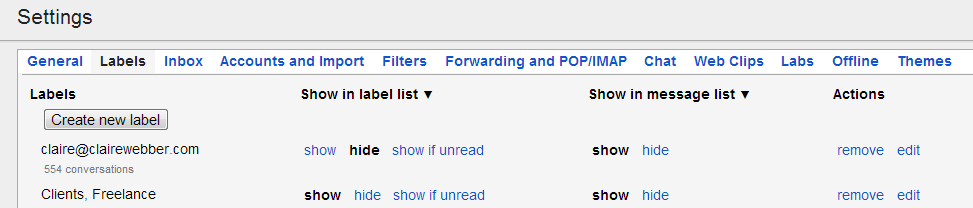
Have your ever tried using Labels in Gmail? Labels in Gmail function sort of like tags or folders – they group your messages together with the added benefit of being able to place multiple labels on the same messages. You have some automatically created labels when you sign up for Gmail, but labels become infinitely more useful when you customize them to your emailing habits…. [Read More]

Let’s say you’ve been on a wonderful internet-free vacation for the last month. You’ve come home, unpacked, and you’ve logged into your email. I want you to imagine what your inbox looks like. Is it crammed with over 200 messages? Are your important emails rubbing shoulders with expired coupons? Is it enough to make you consider moving to an off-the-grid hermitage? It doesn’t need to… [Read More]

If you are a voracious reader — even if you will never give up the pleasure of paper — you may be considering an eReader device. But wait! You don’t need to commit just yet. You can try before you buy. “After 5 years, eBooks is a multi-billion dollar category for us and growing fast — up approximately 70% last year,” said Amazon founder Jeff Bezos. “In… [Read More]

eReading devices are one of the most polarizing topics among bibliophiles – but whether you’re glued to your Kindle or loyal to print-and-paper, being able to easily read ebooks on your computer is a revolutionizing experience. Why on a desktop? If you’ve got an eReader, you might not see the point in having a eReader program on your home computer. But consider: Being able to… [Read More]