
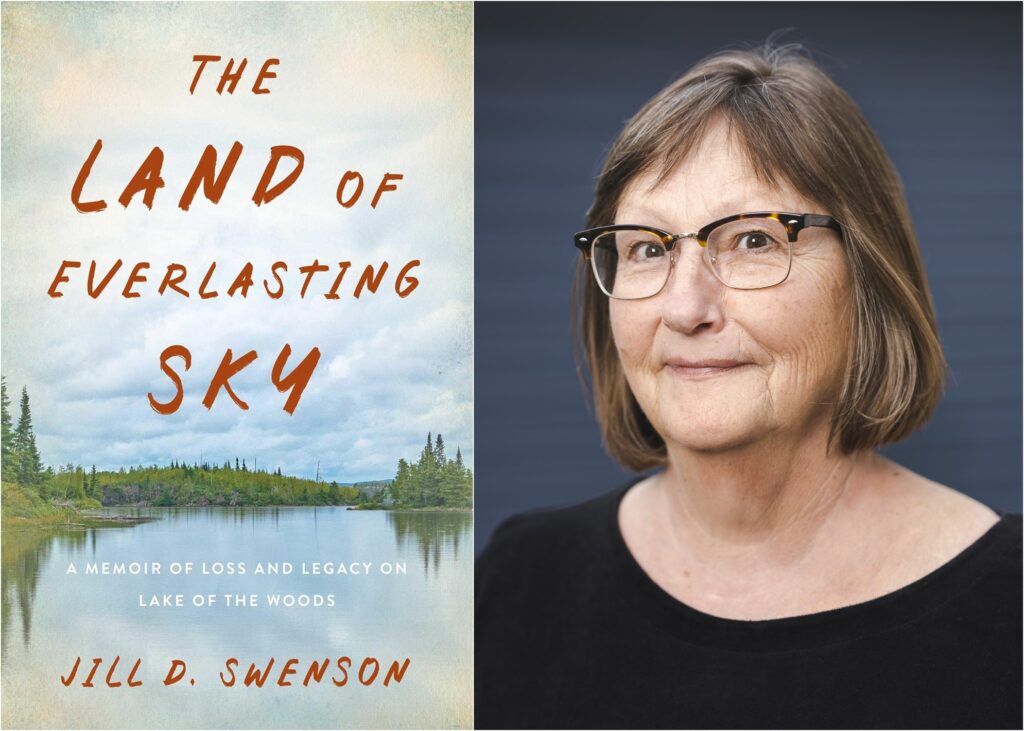
Jill D. Swenson’s forthcoming memoir, The Land of Everlasting Sky: A Memoir of Loss and Legacy on Lake of the Woods, will be released on June 2 from She Writes Press (distributed by Simon & Schuster). Early reviews have praised the book; D. Donovan, Senior Reviewer at Midwest Book Review calls it, “…a powerfully evocative discourse on race, culture, and personal empowerment which weaves together a seemingly disparate set of values and observations, creating a narrative powerfully impactful in its tone and approach to life.” And Kirkus Reviews writes, “Deeply moving and eye-opening, this memoir confronts the centuries of systemic bigotry that have led to Indigenous erasure.” Clear-eyed and yet deeply personal, The Land of Everlasting Sky is a compelling exploration of the history we inherit and our relationships to land and each other. You can pre-order your copy here.
Q: You learned an Ojibwe family had been removed from their land to build a casino. How did that discovery lead to a book?
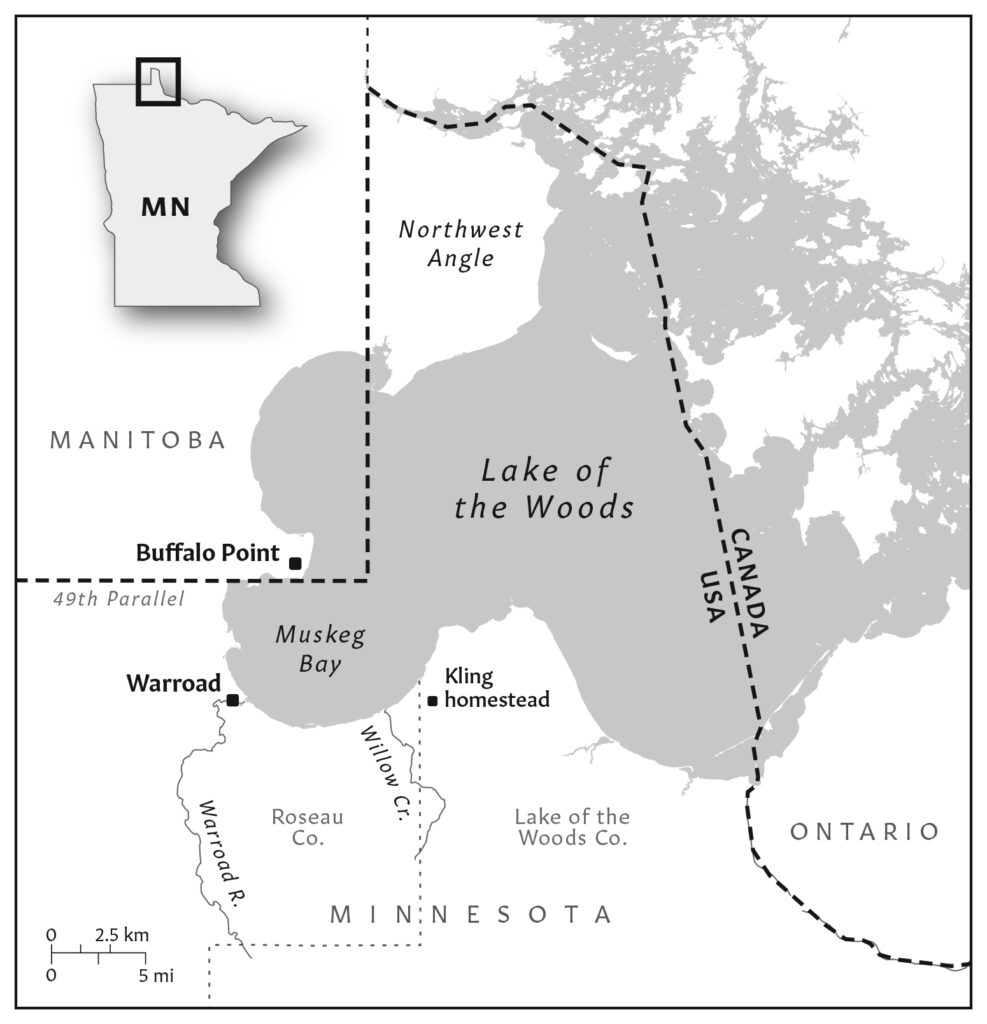
A: After my mother’s funeral, I visited northern Minnesota where she grew up. My fondest memories of Mom were from my childhood vacations spent with her family in Warroad—picking wild blueberries, swimming in Lake of the Woods, seeing a moose, meeting an old Ojibwe man named Kakaygeesick in the nursing home. When I returned to Warroad in 2014 and discovered Kakaygeesick’s great-grandson, Don, and his elderly mother had been forcibly removed from their land by Red Lake Nation to build a new casino, I thought it was an outrage. I wanted to know how and why this could happen in the twenty-first century. The answers to my research questions kept leading me back to the turn of the twentieth century when a wave of white settlers like my great-grandparents arrived to stake claims on what had been reservation land. This changed how I thought about myself and the history I inherited as much as it changed the way I thought about the landless Kakaygeesick family. Braiding these two strands together gave me the idea for the book.
Q: The title of your book works on two levels: it describes a place, and it’s the translation of an Ojibwe word. Can you explain?
A: The title refers to the geographic location of this special place. When you look at a map of Minnesota, at the top in the middle there is a notch that juts above the forty-ninth parallel, known as the Northwest Angle. It’s a six-hour drive north of the Twin Cities to Warroad. While it is an apt description of the landscape there, “Everlasting Sky” is a translation of the Ojibwe name Kakaygeesick [Kah-kay gee-zhig].
 Q: Who was Everlasting Sky?
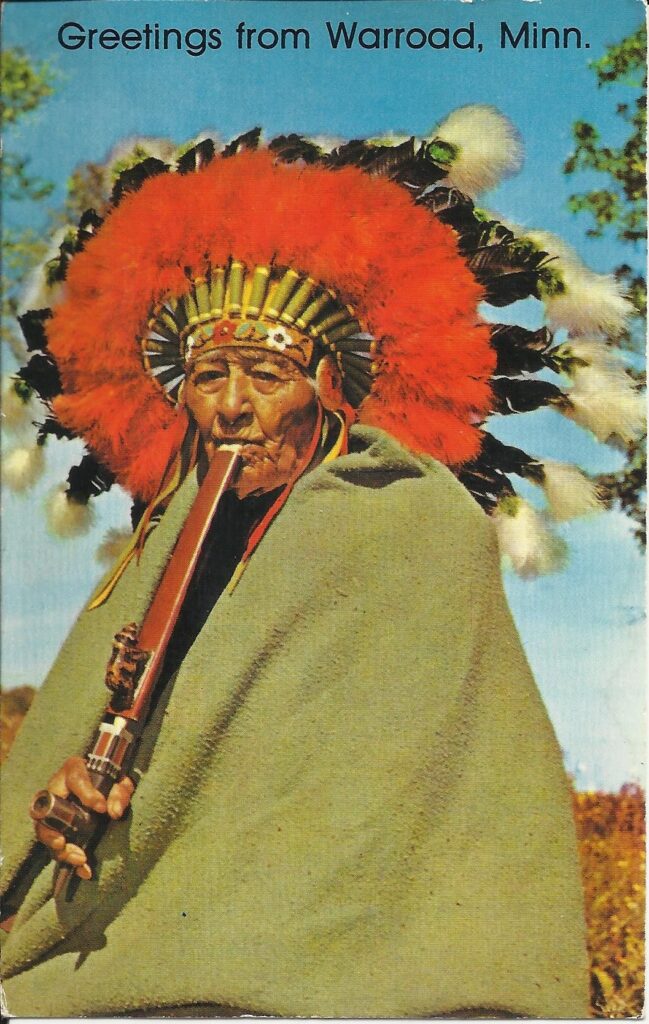
A: Born in 1844, he grew up on Lake of the Woods as the son of Chief Ay Ash Wash. He became a Grand Midewin, a spiritual leader. In 1905, the US government issued him an allotment which restricted homesteaders from making claims on the land where he had long resided, and where other displaced and dispossessed Indians took refuge. By the time I was a kid, Kakaygeesick was a local celebrity. Dressed in his regalia, he served as Fourth of July parade marshal for decades. His photograph appeared on the cover of Minnesota Conservation. Polaris had him pose on a snowmobile for a catalog. Kakaygeesick died at the age of 124, six months after I met him in December 1968. The postcard of him I’d purchased decades ago at the trading post still hung on my fridge when my sister called to tell me if I wanted to come home before Mom died, I’d better get on the road.
Q: You went to the Warroad Heritage Center looking for your family’s history, and you walked out with the family history of Kakaygeesick. How did this trip turn into a collaboration with the Kakaygeesick family?
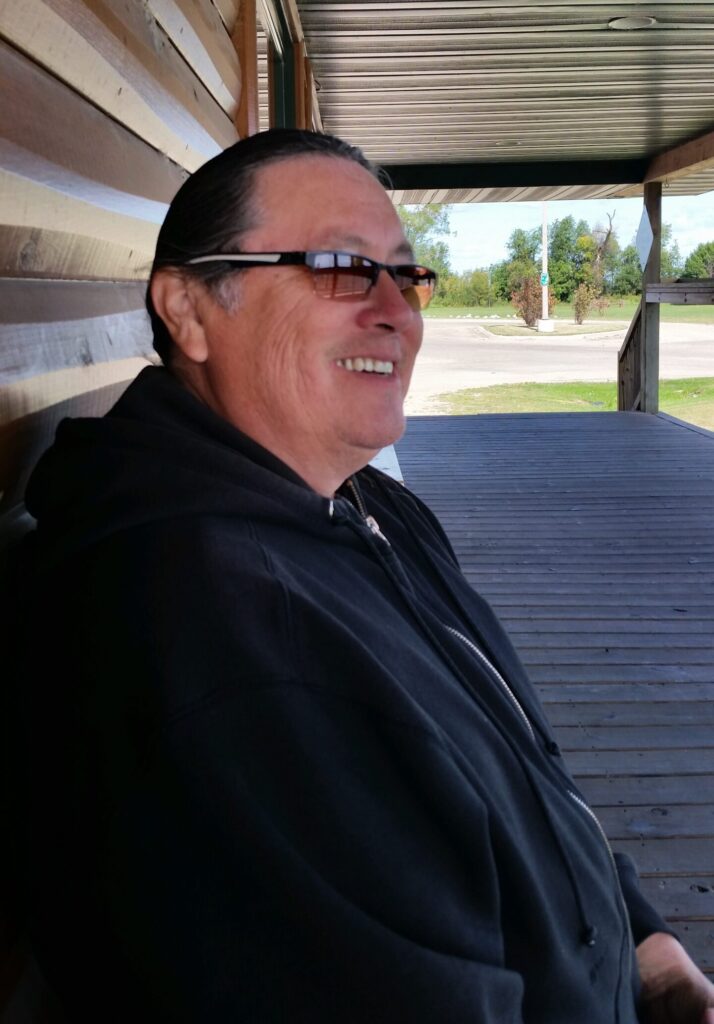
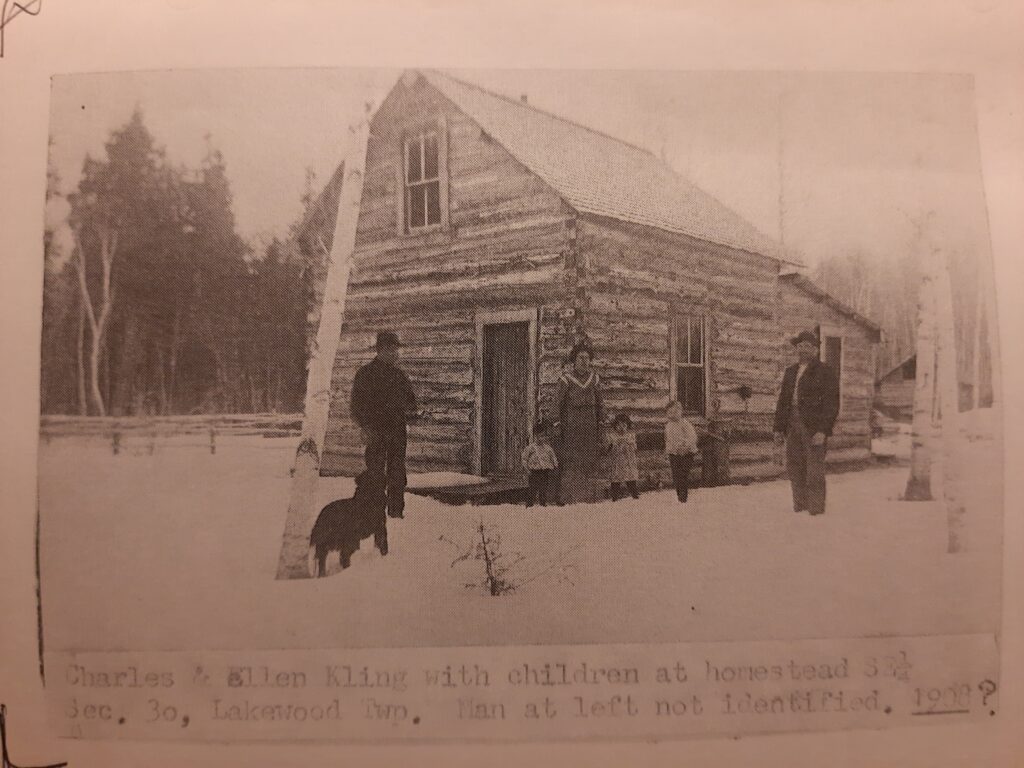
A: Searching the Warroad Heritage Center and Public Library for local history about my Kling family, I learned what had happened to the descendants of Kakaygeesick. Beth Marvin, a senior volunteer at the Warroad Heritage Center, called Don and asked if we could come for a visit. Beth drove, and Don’s granddaughter, “Bug,” greeted us at the doorway. She took my hand and ushered me into the living room where I met Don’s mother, Florence, and his sister, Karen. Don graciously answered my questions and pulled out his great-grandfather’s will and the original allotment papers. He began to tell me his family history, and that began my search to understand how and why it happened.
Q: You write that putting the past behind you is a pattern passed down through generations in your family. What did you have to unlearn before you could write this book?
A: Listening to Don and his siblings tell me their history in such detail and depth made me acutely aware of how little I knew about my own ancestors. Forgetting, ignoring, minimizing, or denying unpleasant or inconvenient memories is a pattern passed down to me over several generations. I didn’t know or understand the history I had inherited. And what I didn’t know about allotments, blood quantum, the Bureau of Indian Affairs, and the history of Red Lake Nation had made my prejudices invisible to me and required remedial education on my part to understand what land dispossession had to do with me.
 Q: Most of us are curious about our family history and where we came from, but what would you say to readers who aren’t sure they want to know the facts instead of the lore and legends passed down of their ancestors?
A: Learning about our ancestors and the relationships they had to the land changes the way we make sense of who we are. If we are to mend our relations to each other and the earth, we must first reconcile with our past, no matter how distant, shameful, or tragic.
Get your copy of The Land of Everlasting Sky today!
This is an excellent, thoughtful, and enlightening Q & A. I’ve glanced at portions of the book and noted then, as it is in this Q&A, honest and courageous reflection, asking us to do the same in understanding our place in space and time. I am very much looking forward to receiving my preordered copy June 2!