
Carolyn Porter is a “graphic designer, typography geek, and founder of the graphic design company Porterfolio,” but you may know her as the author of Marcel’s Letters: A Font and the Search for One Man’s Fate. This memoir recounts Carolyn Porter’s journey through designing a font and her quest for answers about Marcel Heuzé, the World War II forced laborer whose handwriting inspired the font. Marcel’s Letters was nominated as a 2018 finalist in the Minnesota Book Awards and won a gold medal award in the category of Memoir/Biography at the Military Writers Society of America’s 2018 Medal Awards in South Carolina. On November 6, the paperback version of Marcel’s Letters was released, and I had the chance to interview Carolyn Porter for Swenson Book Development regarding this exciting news. Audrey Arnold: I can imagine that this journey from writing to publication to paperback release and beyond has been quite the whirlwind ride for you. How have you managed to balance everything? Carolyn Porter: I meet with a lot of book clubs, and I find it laughable when people greet me like some sort of celebrity. I remind them I’m just me. I still live in a small 1950s rambler in White Bear Lake. I still work full time as a freelance graphic designer. I still take my dog for a daily walk around the neighborhood (sometimes in my pajamas). My biggest client hasn’t read the book yet. I find that refreshing, actually. On a day-to-day basis we talk about…


Before Lady Gaga, before Madonna, Cher, Lucy. Even before Mae West. In fact, Mae West started out in the shadows of the original cyclonic comedienne, Eva Tanguay (1879-1947). Andy Eerdman unearths the lost legacy of one of the most famous women in her day in this compelling history, Queen of Vaudeville, just released by Cornell University Press. Raised in a typical New England mill town, Miss… [Read More]
Filed Under: Andrew Erdman, book trailer, Cher, Cornell University Press, cyclonic, Eva Tanguay, I Don't Care, Lady Gaga, Lucy, Madonna, Mae West, Mary Brett Lorson & the Soubrettes, Queen of Vaudeville, signature song
No Comments

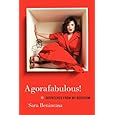
“When I was seventeen years old, I met the hottest guy…,”so begins Sara Benincasa‘s memoir about a boy who would never pick her as his girlfriend. “Kevin entered a new high school in a new town and was immediately nominated for Best Looking, Most Likely to Succeed, and Best Personality – stunning trifecta of high school laurels… Then, one night in the spring, he walked… [Read More]

Military Writers Society of America convenes in Ohio September 27-29 for the annual conference and awards Banquet. An association of more than a thousand authors, poets, and artists come together by the common bond of love for the men and women who defend our nation, and a deep and personal understanding for their sacrifice and dedication. Their stories weave the fabric of our nation’s history…. [Read More]
J. Robert Lennon makes the surreal perfectly plausible with his eye for details from observed everyday reality in his new novel, Familiar, to be released on October 2, by Graywolf Press. The clarity of his prose offers the reader a fresh, stark, and swift opening that situates the reader’s sympathies with the main character, Elisa Brown. Driving across Wisconsin, she recalls her sons’ early years… [Read More]
Do you have a song lyric you plan to use as your epigraph? Is there a piece of artwork you’d like to see between the pages of your book? Do you want a poem to be inserted into the narrative? Have you excerpted a long passage from another book? Do you use trademarked brand names? Are there tables or diagrams, schematics or sketches that are… [Read More]
Filed Under: artwork, ASCAP, copyright permissions, Fair Use, photographs, poetry, publishing contract, song lyrics, trademarks, US Copyright Law