
Linda J. Spielman’s A Field Guide to Tracking Mammals in the Northeast is a wonderful reference tool for the backyard enthusiast or the back-to-the-woods survivalist. Countryman Press published her book on July 4 and her distributor W.W. Norton sent a copy I donated to a Little Free Library here in Appleton, Wisconsin. Little Free Libraries began in Wisconsin and grew into a global movement based on a simple premise: take a book, leave a book. Now a nonprofit organization, Little Free Libraries, inspires a love of reading, build community, and spark creativity by fostering neighborhood book exchanges. Here in Appleton there are hundreds of Little Free Libraries scattered across many neighborhoods. There is a new one on Winona Way where I used to live. Across from City Park, there’s one that looks exactly like the house it sits in front of in the historic district. Most elementary schools have one on the playground or near the main entrance. They’re everywhere. Recently I stopped at the Little Free Library on Pacific Street to leave a new copy of Linda Spielman’s new field guide and took an old paperback edition of Barbara Pym’s Excellent Women. First published in 1952, this comedy of manners is a favorite of mine. The book details the everyday life of a “spinster” in her thirties in 1950s England and her witty spoof on gender relations in a self-deprecating voice with the sharpest wit is something to reread. There is a certain irony in that Linda Spielman reminds me…


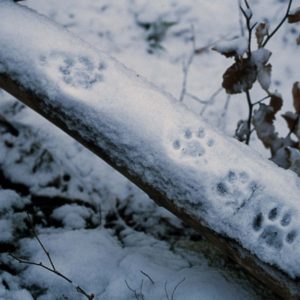
Today I welcome Linda J. Spielman as a guest-blogger. Linda is the author of A Field Guide to Tracking Mammals in the Northeast (Countryman Press/W.W. Norton). Now that snow is in the forecast, it’s a fabulous time to get outside and start tracking wildlife. Linda Spielman shares her experience of finding bobcat tracks with us. You can enter to win a free copy of her… [Read More]
Filed Under: A Field Guide to Tracking Mammals in the Northeast, Bobcat, Linda J. Spielman, tracking
No Comments


Whether you are a reader, aspiring author, or working on your next book, there are things YOU can do which make an enormous difference in the life of an author. The reason authors write a book is to connect with readers and the best rewards come from readers who let an author know their book had an impact. Most readers don’t know how important their… [Read More]

When you are writing for print, ideas and stories are communicated in a visual-linear mode which engages logic and thought. The kind of writing you do for a listener is quite different than when writing for readers. Writing for print addresses the intellect: the intent is to communicate an idea or present the facts and let the reader infer the meaning and significance of the… [Read More]
Filed Under: alliteration, attribution tags, contractions, numbers, puntuation, repetition, Writing for audio

Will Schwalbe, author of End-of-Your-Life Book Club, recently spoke at the Fox Cities Book Festival. He read several excerpts from this wonderful new title Books for Living, a memoir of a reader. In 26 chapters, Schwalbe writes about the books which shaped his own life story. He did not intend the specific books which are chapter titles to be a reading list of either the… [Read More]

What should be in your digital toolkit for the business of being an author? Google Suite for your email. Do you wonder why your emails don’t get a reply? It may be they were never delivered. If your account is with AOL, Hotmail, or Yahoo, there is a strong likelihood if you send someone you don’t already have a connection with they will never receive… [Read More]
Filed Under: Bitly, Facebook, GoodReads, Google Suite, Instagram, LessAnnoyingCRM, LinkedIn, MailChimp, Twitter, WordPress